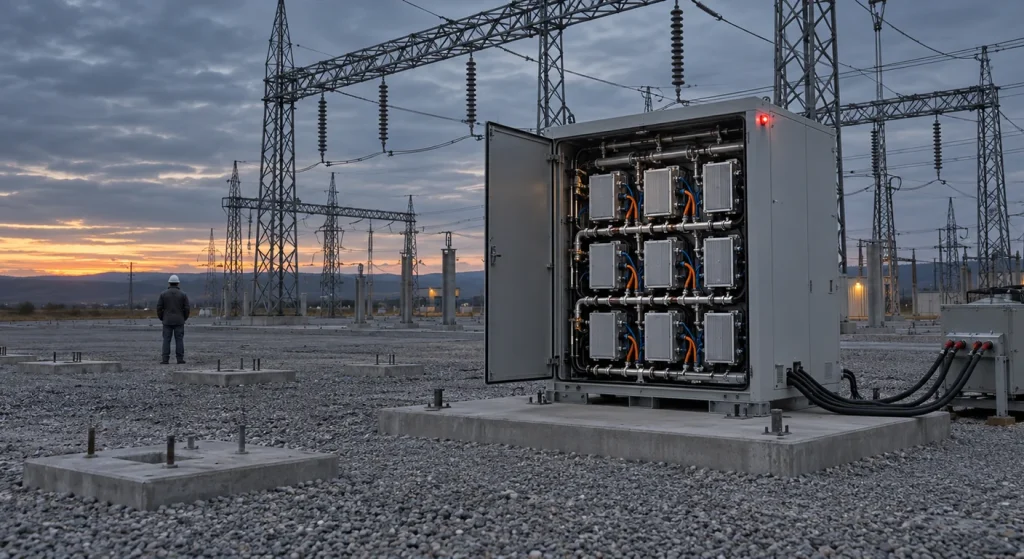
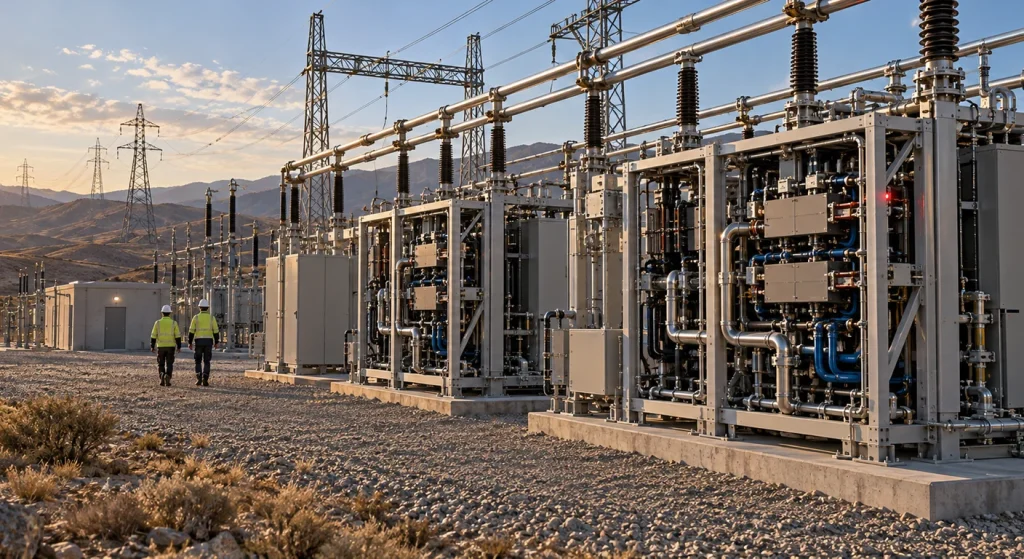
TMEIC, Mitsubishi Electric, and the Japan Solid-State Transformer Market That Will Quintuple to $45 Million by 2030

- Japan SST market: $9.8M (2024) u2192 $45.2M (2030) at 28% CAGR
- Industrial anchors: Mitsubishi Electric (SiC), Hitachi (via Hitachi Energy), TMEIC (Toshiba-Mitsubishi JV)
- MEXT research program: 6.6 kV MV to 200 V LV interface SSTs using SiC + GaN devices
- Japanese SST drivers: industrial customers, Shinkansen traction modernization, distributed PV penetration
- Strategic question: whether Mitsubishi + Hitachi pivot toward US/European export or stay domestic-focused
The Japan solid-state transformer (SST) market generated approximately $9.8 million in revenue in 2024 and is forecast to reach $45.2 million by 2030, growing at a 28 percent compound annual growth rate. The Japanese SST industrial base is anchored by Mitsubishi Electric Corporation (the dominant Japanese SiC power-device supplier), Hitachi Ltd. (now operating SST production through Hitachi Energy following the 2020 acquisition of ABB Power Grids), and Toshiba Mitsubishi Electric Industrial Systems (TMEIC), the joint-venture systems-engineering firm formed in 2003.
TMEIC is the primary systems-engineering arm for Japanese SST applications in substation and industrial-process settings. The firm uses state-of-the-art equipment manufactured by its parent companies (Toshiba and Mitsubishi Electric) and has supplied power-electronics equipment to industrial customers globally for over twenty years. TMEIC’s substation-solutions product line includes the equipment families into which SST modules can be integrated.
The technical center of the Japanese SST industry has been the Ministry of Education, Culture, Sports, Science and Technology (MEXT) research program on SSTs interfacing 6.6 kilovolt medium-voltage distribution grids to 200-volt low-voltage networks. The 6.6 kilovolt / 200 volt voltage classes are the dominant Japanese distribution standard, equivalent to but distinct from US 4.16 kilovolt or 13.8 kilovolt distribution. The MEXT research has produced SST architectures using both silicon carbide and gallium nitride wide-bandgap devices.
The Japanese SST application focus is also distinct from the AI-data-center-heavy US and European focus. Japan’s relatively low data-center share of national electricity demand and the country’s well-developed nuclear and conventional thermal generation reduce the urgency of the AI-data-center SST adoption case. Japanese SST adoption is driven instead by industrial-customer pulled, by the Shinkansen high-speed-rail traction-transformer modernization, and by the integration of distributed solar PV onto Japanese feeder networks with high penetration ceilings.
The 28 percent compound annual growth rate over the 2024-to-2030 window is below the global SST CAGR (estimated at 30 percent and higher) but is meaningfully ahead of the broader Japanese electrical-equipment market. The strategic question is whether Mitsubishi Electric and Hitachi pivot harder toward exporting their SST product lines into the larger US and European markets, or whether they remain primarily domestic-Japanese-market focused. The export decision will materially shape the global SST industry structure through 2030.
Why It Matters
For firms sizing the Asian market, Japan’s SST segment growing from roughly $9.8 million in 2024 toward $45.2 million by 2030 at 28 percent CAGR is small in absolute terms but anchored by Mitsubishi Electric’s dominant SiC device supply and TMEIC’s systems engineering. The number matters less than the industrial base behind it: Japan can supply devices and integration to the global SST market even if its domestic deployment stays modest.
Critical Perspective
Editorial correction: This post is part of MGRID’s Solid-State Transformer industry coverage. As of May 2026, that body of work systematically framed manufacturer announcements, funding rounds, and laboratory demonstrations as commercial deployments. The reality is that field-deployed commercial-class SST in revenue service globally is measured in single digits, and almost every product cited in this series is at “announced” or “funded” stage, not “operational.” Readers should treat the specific claims in this post against the standards documented in our [SST Industry Reality Check](/?p=9044) (the per-claim audit table maps marketing language to verifiable deployment status). The corrective article is the canonical reference for SST industry reality; this post remains published with its original framing so the editorial drift is traceable.