NineDot’s Bronx Battery Is 19.6 MW and 78.3 MWh in NYSERDA’s Records, and It Does Not Run Until Summer 2027
- C&I Storage Energy Storage News
Marin Holt
- 0
- 8 minutes read
- Power capacity: 19.6 MW
- Energy capacity: 78.3 MWh
- Unit size: 4.896 MW / 19.584 MWh
- State incentives: $9.8 million
- Fully operational: summer 2027
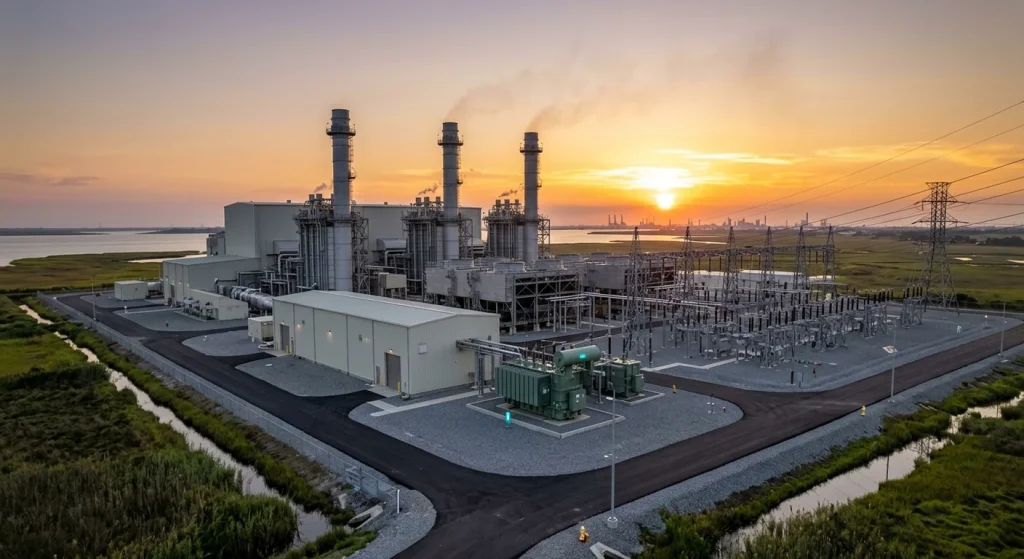
NineDot Energy cut the ribbon on its largest battery storage site in Hunts Point, a New York City neighborhood in the Bronx, in late September 2026. The company release is dated September 25 and describes the ceremony as held the previous afternoon. The company said the system will deliver nearly 20 megawatts to the neighborhood, enough for nearly 20,000 homes during peak grid hours. What the announcement left out was the energy capacity. Best Magazine went to NYSERDA’s records on September 28 and found it there: four 4.896 MW systems of 19.584 MWh each on adjoining Casanova Street sites, or 19.6 MW and 78.3 MWh in total. The same file names CATL as the cell manufacturer and lists $9.8 million of combined state incentives.
Energy capacity is the number that decides what a battery actually does on a hot evening, and it is the number that went unsaid. Divide 19.584 MWh by 4.896 MW and each unit runs four hours. Megawatts describe how hard a battery pushes. Hours describe whether it is still pushing when the peak drags past 8 p.m.
Why It Matters
Community storage is getting celebrated on power ratings while the duration that determines its value sits in a state incentive file nobody reads. For anyone modeling Con Edison’s local relief, that gap is the whole question: a four-hour system covers a New York City summer evening, and it does nothing for a multi-day outage. Get the MWh and the commercial operation date in writing before booking a ribbon-cutting as capacity. When a developer omits the energy rating, the NYSERDA incentive records will usually have it.
Critical Perspective
The NYSERDA file puts the Hunts Point site at 19.6 MW and 78.3 MWh, a four-hour system the company described only in megawatts. NYSERDA contracted 950 MW across 46 bids in the state’s first bulk storage solicitation this September, which makes a 19.6 MW community site a rounding error against New York’s own procurement. Con Edison’s two-part interconnection test raised upgrade costs 14-fold on 34 battery projects worth 161 MW, and that is the line deciding whether NineDot’s 60 further projects reach a pad. If the energy rating had to be read out of an incentive file this time, what is the MWh of the next site nobody asks about?
What Is Actually Built
A former fuel oil trucking business used to occupy the site. It sits inside Con Edison territory and is meant to support the local distribution grid at peak. NineDot’s release says the system will be fully operational “in time for next summer’s heat waves”, which Best Magazine reads as summer 2027. Solar Builder, writing on September 25, said NineDot “has energized” the site and opened with “Now fully operational”. Both cannot be right. The company’s own release is the one that says next summer.
Give the 20,000-homes claim credit: it survives a check against NineDot’s own arithmetic. Describing New York’s July 1 to 4 heat wave, the company said nine of its battery projects exported nearly 34 megawatts at peak, which it called the equivalent of powering approximately 34,000 households for four hours a day. One kilowatt per household is the convention there, and on that basis nearly 20 megawatts does line up with nearly 20,000 homes. The figure holds. It holds because of a four-hour assumption the release never prints.
Scale is the other place the language runs ahead of the plant. Eleven NineDot projects at six locations total 39 MW across Staten Island and the Bronx, which the company calls the largest battery fleet in Con Edison’s New York City service territory, and it claims more than 60 further projects in development against a pipeline above 1 GW. It also says it is on track for 400 MW by the end of 2026. Read that target closely and it covers storage “in operation, construction or development”. Only the 39 MW describes plant that runs.
The local case is the most specific part of the announcement and the hardest to argue with. NineDot counts more than 10,000 diesel trucks moving through the area every day, plus two high-emission peaker plants in nearby Port Morris, and it cites 2023 asthma-related emergency room visits in the combined Hunts Point and Mott Haven area at two to three times the citywide average. None of that is in dispute. Whether 78.3 MWh displaces either peaker is a different question, and to the company’s credit the release does not claim it will.