Microsoft Protests the $500 Million Transmission Charge Built for Its Own Wisconsin Data Center
- Data Centers FERC & Federal Policy & Markets Regulatory
Marin Holt
- 0
- 9 minutes read
- ATC transmission upgrade: More than $500 million
- Agreement term: 15 years
- ATC trigger threshold: $100 million or 100 MW
- Transmission share of a We Energies bill: About 10 percent
- Microsoft FERC protest filed: August 21, 2026
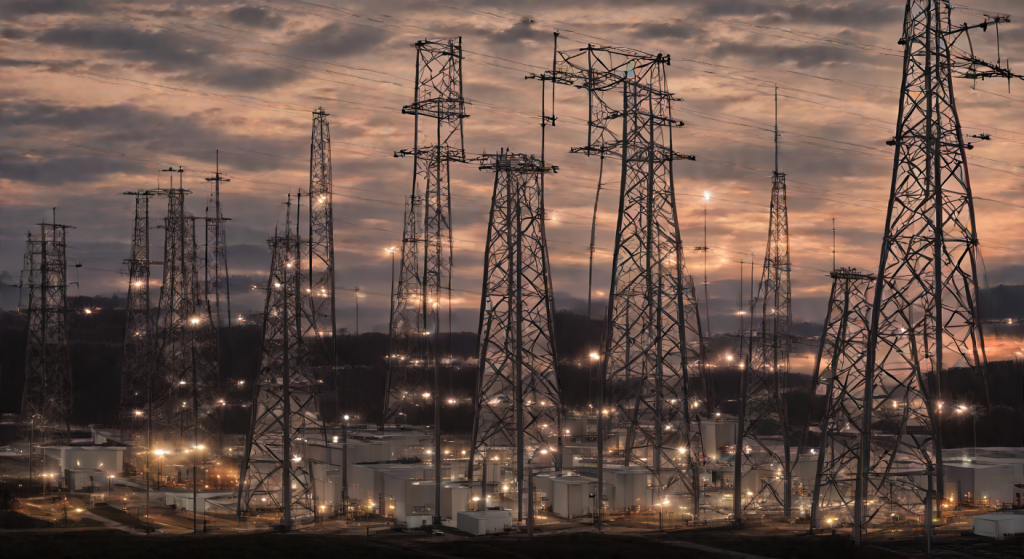
Microsoft filed a protest at the Federal Energy Regulatory Commission on August 21, 2026. The target is a transmission charge agreement that American Transmission Co. and Wisconsin Electric Power Co. wrote to serve the Microsoft data center campus in Mount Pleasant, Wisconsin. ATC expects to spend more than $500 million on the grid connection to that one site. The charge would run 15 years. It starts the day the last new facility enters service.
How the Charge Works
ATC calls the mechanism a minimum transmission charge. It bills We Energies for the full block of capacity Microsoft requested, and that bill stands whether or not Microsoft ever draws the power. We Energies then passes the cost through. The structure applies when transmission construction costs pass $100 million, or when new facilities are sized to serve more than 100 MW. Mount Pleasant trips both.
“It starts charging that utility for this transmission capacity that they requested for their customer when those facilities go in service,” ATC told Wisconsin Public Radio in early August.
What Microsoft Objects To
Microsoft told FERC the agreements “predictably contain significant deficiencies, errors, contradictions and inconsistencies.” Three problems sit under that language. Nothing in the filing keeps We Energies retail customers off the cost of facilities built for a single load. Microsoft says it faces paying twice for the same capacity. And the early termination fee would charge the company far more than whatever value is left in the infrastructure, if Microsoft walks before year 15.
Microsoft asked FERC for settlement judge proceedings rather than a ruling on the filing as written.
The company signed the White House Ratepayer Protection Pledge on March 4, 2026, alongside Amazon, Google, Meta, OpenAI, Oracle and xAI. Signers commit to pay the full cost of the power their facilities use and of the infrastructure that delivers it. Lawyers for Microsoft cited that pledge in the protest. They pressed a “cost causer, cost payer” standard against the ATC design.
The Ratepayer Advocate Reaches the Opposite Conclusion
The Citizens Utility Board of Wisconsin filed its own protest the same day and disputed the arithmetic from the other direction. ATC “will almost certainly undershoot the actual cost of data centers’ transmission needs,” said CUB analyst Corey Singletary. Transmission is roughly 10 percent of a We Energies bill today. One more detail belongs in the record: WEC Energy Group owns We Energies and is also the largest shareholder in ATC.
The Public Service Commission of Wisconsin is reviewing the same agreement under docket 598091. State regulators said this month that the ATC filings were “far from fully responsive” to what FERC required.
Why It Matters
FERC issued show cause orders in mid-June telling transmission providers to write standard agreements for large loads. Two months on, the first two customers handed those agreements are both fighting them. PowerHouse Hillwood asked FERC on August 14 to reject a Commonwealth Edison cancellation of a transmission security agreement covering a 1.8 GW, $20 billion campus in Joliet, Illinois. Without standard terms, it told FERC, utilities “will use their monopoly power as a bludgeon.”
So who is actually protected here? Every large load now sitting in an interconnection queue will sign some version of these terms, which makes Mount Pleasant the first real test of a minimum transmission charge. If FERC accepts the ATC structure, utilities gain a template that guarantees recovery on capacity a customer never draws. If Microsoft wins settlement judge proceedings, the terms get rewritten in a closed room. Either way, the public record on how data center transmission costs get split grows thinner.
Critical Perspective
The protest reads well, and it still leaves the central question open. Microsoft signed a pledge in March to pay the full cost of the infrastructure its data centers require. It now objects to a 15-year commitment and to a termination fee that prices the risk of walking away early. Those two positions are hard to hold at the same time. A minimum transmission charge exists because a utility cannot unbuild a $500 million line if the customer leaves in year six.
Two protests landed the same day and reached opposite complaints about the same document. Microsoft says the deal risks pushing costs onto We Energies customers. CUB says the deal undercharges the data center. Both readings hold only if the charge is mis-structured rather than merely mis-sized. Neither protest publishes the load forecast the charge is built on, and that forecast is the number everything turns on.
Then there is the seating chart. WEC Energy Group owns We Energies and is also the largest shareholder in ATC, so the utility negotiating the charge and the transmission owner collecting it answer to one parent. FERC will decide this on the filed rate, not on ownership. The fact still belongs in the record.
Sources
- The White House, “President Trump Secures Historic Commitment to Keep Electricity Costs Down Amid Data Center Boom” (March 4, 2026)
- Utility Dive, “Microsoft, PowerHouse Hillwood dispute data center service agreements” (August 24, 2026)
- WRJN Racine, “Microsoft, ratepayer advocates challenge ATC plan for data center transmission costs” (August 26, 2026)
- Wisconsin Public Radio, “American Transmission Co., We Energies ask regulators to approve data center cost agreement” (August 3, 2026)