REV Renewables Commissions California’s First 8-Hour Battery
- Energy Storage News Utility-Scale BESS
Marin Holt
- 0
- 6 minutes read
- Capacity: 69 MW / 552 MWh
- Discharge duration: 8 hours (first in California)
- Commissioned: June 18, 2026
- Offtake: Seven CCA members via California Community Power
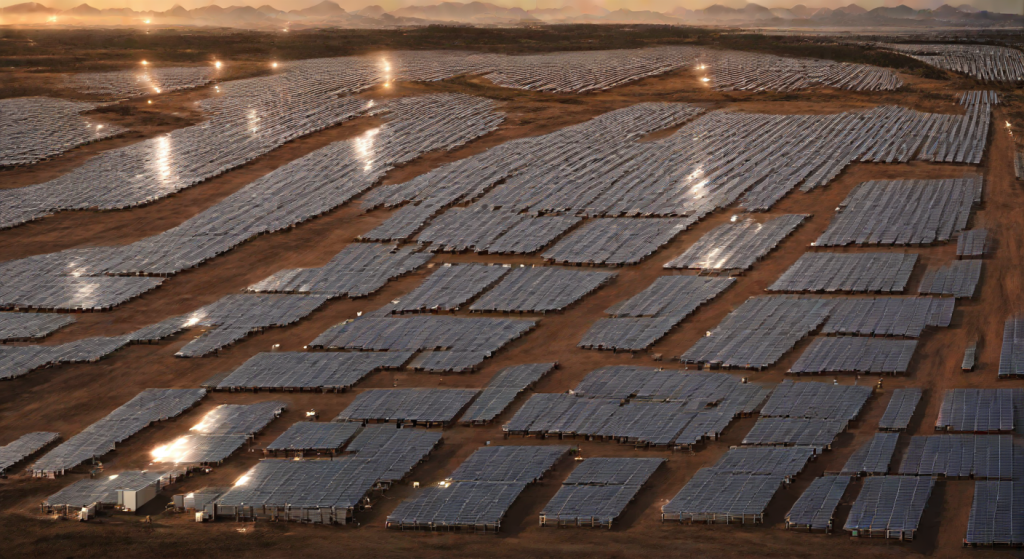
REV Renewables commissioned its Tumbleweed Energy Storage facility near Rosamond, Kern County, California, on June 18, 2026. The lithium-ion battery system provides 69 MW of power and 552 MWh of energy, with a minimum discharge duration of eight hours. The company and the California Public Utilities Commission (CPUC) identify it as the first eight-hour battery energy storage system in California and within the CAISO grid, and the first eight-hour long-duration project delivered under the CPUC’s Integrated Resource Plan procurement requirements.
The output from the Tumbleweed facility is contracted by California Community Power, a Joint Powers Agency, and Ava Community Energy. Seven community choice aggregator (CCA) members hold the offtake: CleanPowerSF, Peninsula Clean Energy, Redwood Coast Energy Authority, San Jose Clean Energy, Silicon Valley Clean Energy, Sonoma Clean Power, and Valley Clean Energy. The commissioning follows an offtake contract those members signed in January 2022.
REV Renewables is an LS Power company. The Tumbleweed offtake was procured to help the seven CCA members meet the CPUC Mid-Term Reliability Procurement order (Decision D.21-06-035), which directed load-serving entities to add long-duration storage. Most of California’s existing battery fleet discharges for four hours, so eight-hour resources remain scarce on the grid.
The roughly four and a half years between the January 2022 offtake contract and the June 2026 commissioning show how long current long-duration storage takes to move from signed procurement to grid operation. That lead time carries weight because the CPUC’s Mid-Term Reliability order set staggered compliance deadlines, and the seven aggregators still have to source the balance of their long-duration obligation beyond Tumbleweed. REV Renewables, an LS Power company, owns and operates the facility, so the participating members hold contracted output rather than the asset itself.
The offtake runs through California Community Power, a joint powers agency the aggregators formed to pool demand for large clean-energy projects. That structure let seven smaller load-serving entities jointly underwrite a single utility-scale battery that none would likely have contracted alone.
Critical Perspective
The “first eight-hour battery” label rests on Tumbleweed’s minimum rated discharge duration, not a demonstrated eight-hour delivery at the full 69 MW across an actual grid event, and at 69 MW the project is small next to the gigawatts of four-hour storage already on CAISO. REV Renewables reports Tumbleweed covers roughly 55% of the long-duration obligation for all seven participating aggregators combined, which shows how little qualifying long-duration capacity exists rather than how much. The offtake contract was signed in January 2022 and the system reached operation only in June 2026, so even mandate-backed long-duration projects take more than four years to deliver. The open question is whether eight-hour systems keep getting built once the CPUC compliance requirement that underwrote this one is satisfied.
Why It Matters
The eight-hour discharge duration distinguishes Tumbleweed from the four-hour systems that make up most of California’s battery fleet, extending the window to shift midday solar into the evening demand peak and the grid’s steep sundown ramp. REV Renewables reports the project satisfies roughly 55% of the long-duration storage compliance requirement for the seven participating CCA members. Whether eight-hour batteries spread beyond compliance-driven procurements will depend on cost: longer-duration resources earn much of their value from capacity and CPUC mandates rather than the daily energy arbitrage that pays for four-hour systems.