Permanent Power Closes $600M Financing
- Energy Storage News Storage Markets & Tariffs
Marin Holt
- 0
- 6 minutes read
- Construction financing: $600 million
- Solar capacity: 246.4 MWac
- Battery storage: 150 MWac (600 MWh)
- Offtake contracted: 100% under long-term PPA
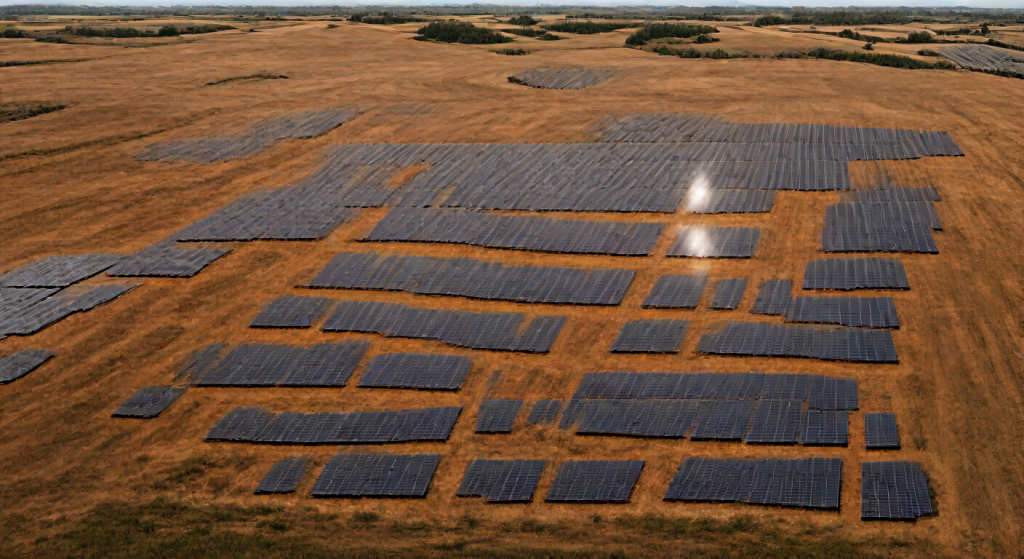
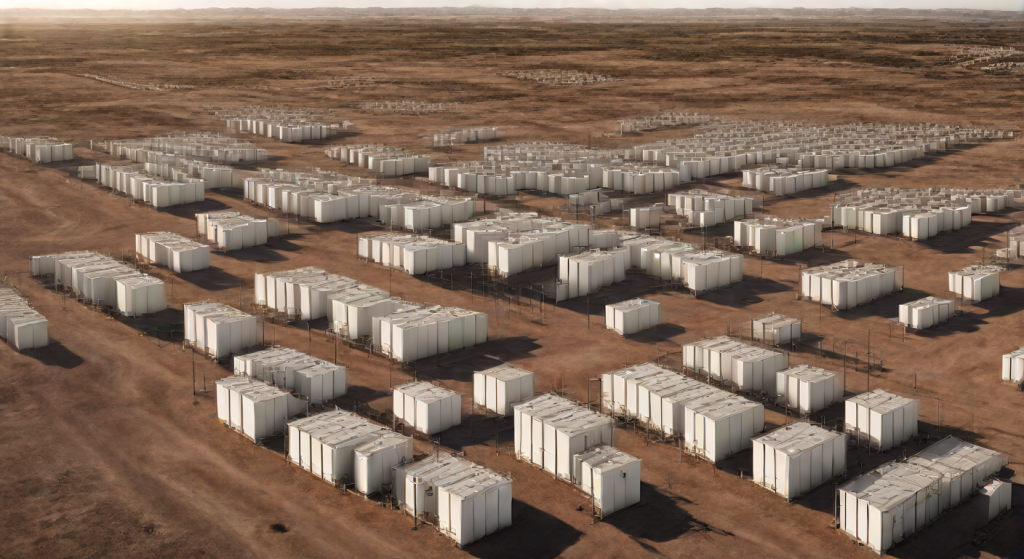
CIM Group’s Permanent Power Company closed approximately $600 million in construction financing on June 18, 2026 for Grape, a solar-plus-storage project in the Westlands Solar Park in California’s San Joaquin Valley. The facility pairs 246.4 MWac of solar photovoltaic capacity with 150 MWac (600 MWh) of battery energy storage, and Permanent Power has contracted 100% of that output under a long-term power purchase agreement signed before construction finished.
The financing package comprises a ~$372.3 million construction-to-term loan and a ~$166.7 million tax credit transfer bridge loan, supplemented by a ~$61.3 million letter of credit facility. This debt was provided by a bank syndicate, with Truist acting as the administrative agent and Wells Fargo serving as the collateral agent. The Grape project is situated within Westlands Solar Park, one of the largest permitted solar parks in the U.S., spanning over 20,000 acres.
Permanent Power has secured a long-term power purchase agreement (PPA) covering 100% of the Grape project’s solar and storage output. The offtaker is an investment-grade, regulated energy service provider, and the PPA was finalized before the project’s completion. Construction is now underway, with the project expected to create over 400 construction jobs and generate enough electricity annually to power more than 86,000 California homes.
Critical Perspective
Permanent Power’s $600 million financing for Grape, a 246.4 MWac solar and 600 MWh storage project, hinges on the assumption that battery storage can be deployed at scale with minimal additional cost. However, Watt-Logic’s analysis in “ASPs for AR7 prove renewables are not cheap” (2025-07-27) indicates that converting intermittent wind/solar to baseload generation through battery storage increases total capital costs by factors of three or more for wind and ten or more for solar. Given the 150 MWac/600 MWh storage capacity, this suggests a substantial increase in overall project costs, potentially doubling or tripling the initial $600 million investment. The financial burden on ratepayers could be significant if these cost overruns materialize. Moreover, the physics of energy storage dictate that higher capacities require larger physical footprints and more robust infrastructure to manage thermal and mechanical stresses. The Grape project’s battery storage is nearly three times the size of the 2018/19 ISEP CAES project, which ultimately failed due to unsuitable geology. The question remains: can permanent power engineering overcome these fundamental limitations at this scale?
Why It Matters
The deal is notable less for its size than its structure. A tax credit transfer bridge loan and a power purchase agreement signed before construction finished are becoming standard tools for moving utility-scale solar past financial close, but both concentrate risk, on a single investment-grade offtaker and on the durability of federal tax credit transfer rules. Grape’s location adds a separate question: Westlands Solar Park already holds thousands of acres of permitted capacity, and clustering projects in one corner of the San Joaquin Valley raises interconnection and curtailment risk that the financing announcement does not address.
This project contributes to Permanent Power’s broader portfolio target of approximately 1,200 MWac solar PV and 690 MWac (2,760 MWh) of battery energy storage, with a strategic focus on Qualified Rural Opportunity Zones. This follows a prior milestone in May 2026, where Permanent Power secured a $400 million financing commitment from funds managed by HPS Investment Partners, part of BlackRock Private Financing Solutions.
Sources
- SEC EDGAR — CIM Opportunity Zone Fund Form 8-K (Grape press release)
- PV Tech
- Power Technology
- CIM Group