Pattern Energy Energizes $11 Billion SunZia Project: 3,515 MW of Wind and a 550-Mile HVDC Line
- Capacity & Wholesale Markets News Policy & Markets
Marin Holt
- 0
- 5 minutes read
- Wind capacity: 3,515 MW
- Transmission: 550-mile HVDC line
- Turbines: 916
- Project cost: $11 billion
- Fully operational: June 18, 2026
Listen to this article
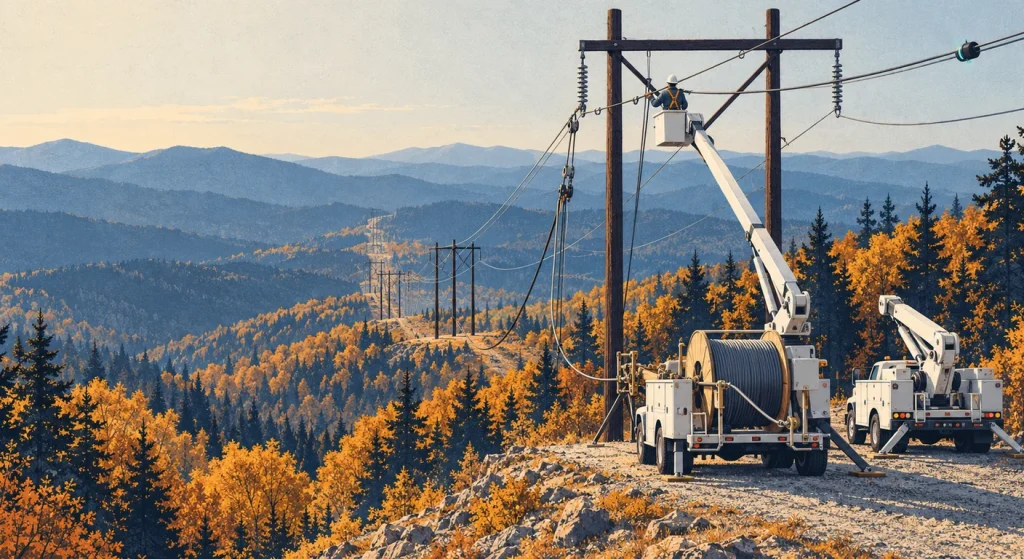
Pattern Energy on June 18, 2026 declared its SunZia project fully operational, sending power from central New Mexico to Arizona and Southern California across a 550-mile high-voltage direct current line. The roughly $11 billion buildout pairs 3,515 MW of wind (916 turbines spread across Lincoln, Torrance, and San Miguel counties) with the longest merchant HVDC line in the United States, making SunZia the largest clean-energy infrastructure project the country has built.
The wind farm runs 674 GE Vernova 3.6 MW turbines and 242 Vestas 4.5 MW machines. Its nameplate output tops the transmission line’s 3,021 MW rating, of which 2,131 MW is contracted to Southern California, and Pattern shapes the difference to keep the line loaded. Offtakers include the University of California, Clean Power Alliance, Ava Community Energy, Central Coast Community Energy, CleanPowerSF, Riverside Public Utilities, and Silicon Valley Clean Energy, a roster dominated by California community-choice aggregators buying New Mexico wind to firm up evening supply.
The line is already reshaping the western market. After SunZia turbines began testing in April 2026, the California Independent System Operator logged 7,122 MW of hourly wind generation on May 15, 2026, 20% above its previous annual record of 5,922 MW set in 2024. At full output SunZia delivers more power than the Hoover Dam and enough electricity for about one million homes.
Critical Perspective
SunZia pairs 3,515 MW of wind with a transmission line rated at just 3,021 MW, and only 2,131 MW of that is actually contracted to Southern California. That gap means the headline capacity oversells firm deliverability, and merchant lines live or die on their contracts, as Invenergy’s Grain Belt Express has learned across more than a decade of litigation still unresolved in Missouri. The sharper warning is the Plains and Eastern Clean Line, a 700-mile direct-current project that Clean Line Energy abandoned by 2018 after failing to line up enough buyers and state approvals, proving a permitted line without offtakers goes nowhere. If SunZia needed nearly two decades and $11 billion to reach commercial operation, how many more merchant lines can the West finance before the 2,131 MW of firm California demand is fully spoken for?
Why It Matters
SunZia took nearly two decades to permit and build, and its completion is a test of whether the United States still finishes interregional transmission at scale. The 550-mile line moves New Mexico wind into CAISO’s evening ramp, when solar fades and prices spike, exactly the hours western grid operators struggle to cover. For data-center and electrification load growth across the Southwest, a single merchant line adding up to 3,021 MW of firm delivery capacity does more for near-term supply than most generation announcements, because transmission, not turbines, is the binding constraint on the western grid.
Sources
- Pattern Energy: SunZia comes online (June 18, 2026)
- U.S. Energy Information Administration: Largest wind farm in the United States starts commercial operations
- Energy Tech: Pattern Energy secures $11B for SunZia
- Renewable Energy Magazine: SunZia slated to begin commercial operation
- PowerGen Advancement: SunZia becomes fully operational