1500 V DC vs 800 V DC: The Voltage Standardization Debate Shaping

- 800 VDC: NVIDIA AI Factory + OCP Mount Diablo (Microsoft+Meta+Google 2025) — data center standard
- 1500 VDC: utility-scale solar PV standard since 2015-2020 shift from 1000 VDC
- SolarEdge-Infineon 2-5 MW SST supports 800-1500 V DC output to address both applications
- Convergence economics favor single voltage; technical optima favor distinct voltages
- Likely 2026-2030: dual-standard equilibrium with manufacturer product lines spanning both
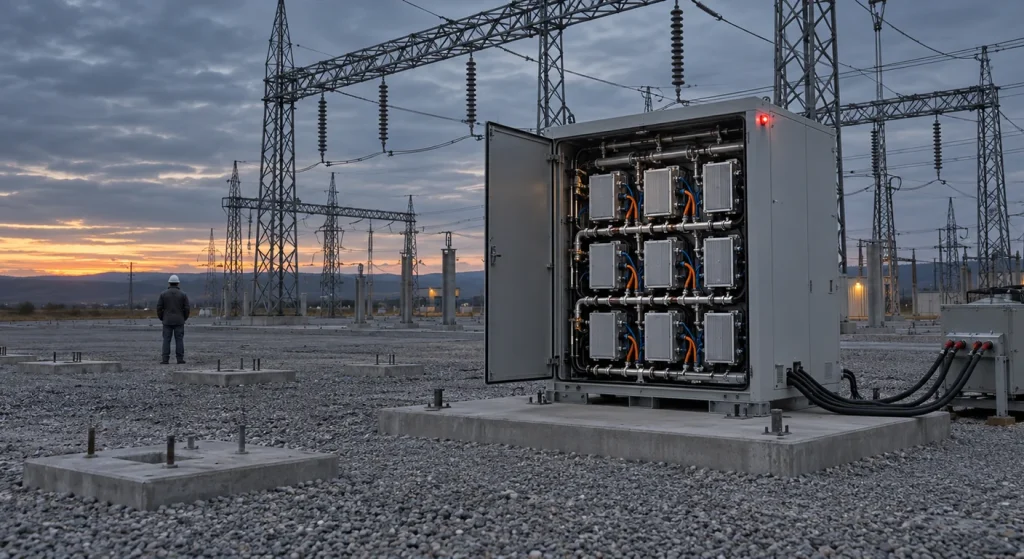
The DC distribution voltage at which large-scale industrial and data-center facilities operate is the single most consequential design choice for the solid-state transformer (SST) industry. Two voltage classes have emerged as the dominant candidates: 800 volts DC, defined by NVIDIA’s AI Factory specification and adopted in the OpenCompute Mount Diablo architecture; and 1500 volts DC, established by utility-scale solar photovoltaic systems over the past decade. Whether the SST industry standardizes on one, on both, or on a tiered architecture connecting both will shape the next decade of product development.
The 800 VDC architecture was chosen by NVIDIA for AI Factory deployments because it matches the voltage class at which silicon-carbide MOSFETs are most cost-effective per kilowatt of switching capacity. The downstream conversion from 800 VDC to the 48-volt or 50-volt DC bus that NVIDIA accelerator cards consume is achievable with a single power-conversion stage. The OpenCompute Mount Diablo specification published by Microsoft, Meta, and Google in 2025 codified 800 VDC as the data-center distribution standard.
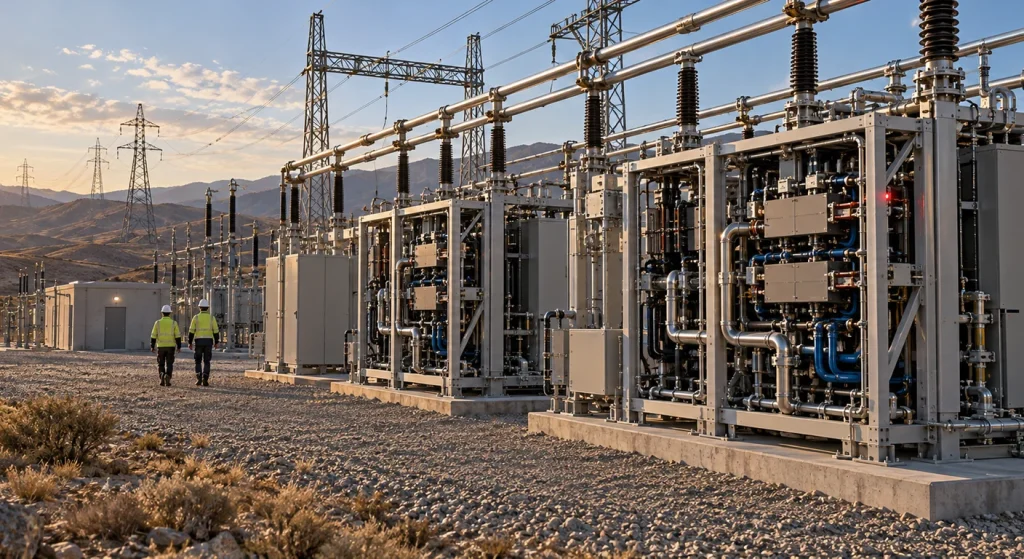
The 1500 VDC architecture emerged from utility-scale solar photovoltaic systems, where the higher voltage reduces conductor losses at long DC string lengths. The shift from 1000 VDC to 1500 VDC in commercial solar happened between 2015 and 2020 and is now the dominant standard for new utility-scale solar projects. The SolarEdge-Infineon 2-to-5-megawatt SST product announced in November 2025 supports an output range of 800 VDC to 1500 VDC explicitly to address both target applications from a single product line.
The technical case for converging on a single voltage is straightforward: economies of scale in conductor, switchgear, protective devices, and downstream conversion equipment all favor a single voltage class. The technical case for two distinct voltage classes is also straightforward: the 800 VDC point is optimal for AI accelerator power architectures, the 1500 VDC point is optimal for utility-scale renewable interconnect, and the difference between the two is large enough that designing equipment for both is genuinely more expensive than designing for either alone.
The likely outcome is convergence on 800 VDC for data-center and EV-charging applications and continued use of 1500 VDC for utility-scale solar and battery storage interconnects, with the SST industry shipping product lines that span both. SolarEdge-Infineon’s convergent product, the Eaton-Resilient roadmap, and the announced product lines at DG Matrix and Heron Power all support both voltage classes through configurable output stages. Whether this dual-standard equilibrium is stable across the 2030s, or whether one voltage eventually displaces the other, is an open commercial and engineering question.
Why It Matters
The standardization debate between 1500 V DC and 800 V DC has significant implications for the solid-state transformer (SST) industry, affecting product design and development for the next decade. As data-center demand and utility-scale solar projects continue to grow, the choice of voltage class will impact the economics of equipment design, including conductor, switchgear, and protective devices. The convergence of SST technology with emerging trends in the energy sector, such as the increasing demand for battery energy storage systems (BESS) and electric vehicle charging infrastructure, will be influenced by the chosen voltage standard. The decision will also have implications for grid operators, including ERCOT, PJM, and CAISO, as they integrate more renewable energy sources and manage the evolving grid landscape. As the SST industry navigates this standardization debate, it will be important to consider the broader policy and market trends, including FERC orders and IEEE/NERC standards, to ensure that the chosen voltage class aligns with the needs of US utilities and the growing demand for renewable energy.Critical Perspective
Editorial correction: This post is part of MGRID’s Solid-State Transformer industry coverage. As of May 2026, that body of work systematically framed manufacturer announcements, funding rounds, and laboratory demonstrations as commercial deployments. The reality is that field-deployed commercial-class SST in revenue service globally is measured in single digits, and almost every product cited in this series is at “announced” or “funded” stage, not “operational.” Readers should treat the specific claims in this post against the standards documented in our SST Industry Reality Check (the per-claim audit table maps marketing language to verifiable deployment status). The corrective article is the canonical reference for SST industry reality; this post remains published with its original framing so the editorial drift is traceable.
Related Coverage
Likely 2026-2030: dual-standard equilibrium with manufacturer product lines spanning both