How Eaton’s 2021 DOE $4.9 Million Solid-State Transformer Award Set Up the 2025 Resilient Power Acquisition

- Eaton DOE award: $4.9M, December 2021, three-year program
- Target: 65% cost reduction for DC fast-charging stations via SST
- Partners: NREL, NCSU FREEDM, University of Pittsburgh, ITC Holdings, CALSTART
- NREL demo via Advanced Research on Integrated Energy Systems (ARIES) platform
- Outcome: organic development did not reach commercial volume u2192 Eaton acquired Resilient Power Aug 2025 for ~$86M
Eaton Corporation received a $4.9 million award from the United States Department of Energy in December 2021 to develop a fast, low-cost electric vehicle charging infrastructure architecture built around a solid-state transformer (SST). The three-year program targeted a 65 percent reduction in deployed cost per fast-charging station through improvements in power conversion, grid interconnection, modularity, and installation time. Four years later, the project’s outcome is one of the cleanest examples of how DOE pre-commercial R&D funding has translated into a US-based industrial base.
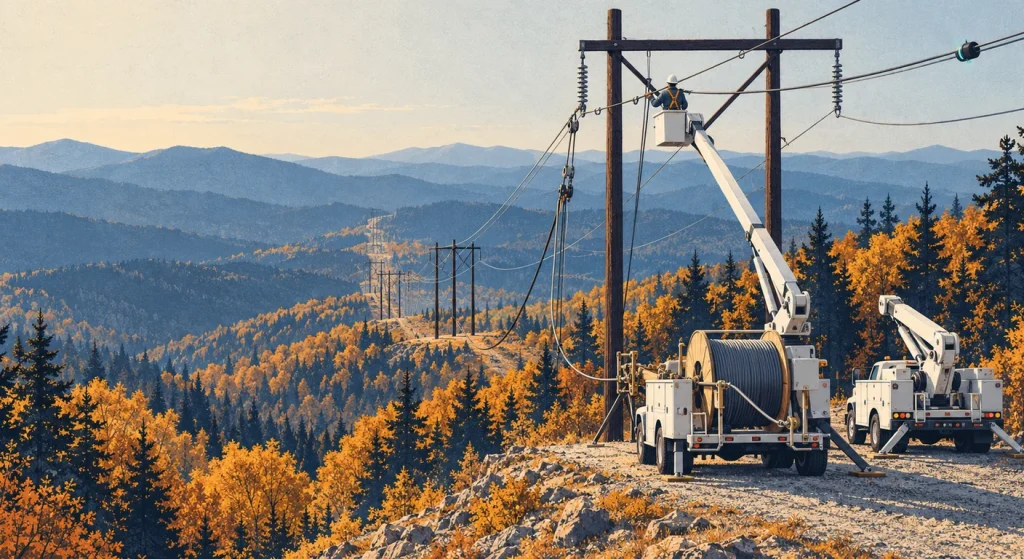
The Eaton project partners list reads like a who’s who of US grid R&D: the National Renewable Energy Laboratory (NREL), North Carolina State University (NCSU, the home of the FREEDM Systems Center), the University of Pittsburgh, ITC Holdings, and CALSTART. NREL provided the initial demonstration site through its Advanced Research on Integrated Energy Systems (ARIES) platform. ITC Holdings contributed a fleet-charging demonstration site. CALSTART provided independent validation of cost and performance against utility-fleet customer requirements.
The technical scope of the Eaton SST in the 2021 program was specifically to enable direct connection of DC fast chargers to the medium-voltage utility distribution system, eliminating the conventional 480-volt step-down transformer and associated power conversion devices that compose roughly one third of the cost of a deployed fast charger. The 65 percent cost reduction target depended heavily on the SST’s ability to displace that intermediate infrastructure.
The DOE program ran from late 2021 through 2024. By the end of the program, Eaton had developed and demonstrated SST hardware at NREL and ITC sites, but had not produced a commercial product line shipping at volume. The gap between the program’s 2024 conclusion and a 2025 commercial launch became visible in Eaton’s August 2025 acquisition of Resilient Power Systems, an Atlanta-based SST startup also funded through ARPA-E grants. The acquisition compressed years of organic development into a single transaction.
The lineage from federal grant to university research group to commercial spinout to incumbent acquirer maps cleanly: ARPA-E and DOE funding into NCSU FREEDM Systems Center and Georgia Tech in the 2010s and 2020s; Resilient Power Systems spun out of Georgia Tech’s power-electronics group under Professor Deepak Divan; Eaton acquired Resilient Power in August 2025 for an estimated $86 million; Eaton now ships MV-SST product at scale. The 2021 Eaton-DOE award was both an Eaton-internal R&D bet and a federal investment in the broader US SST industry that ultimately did not pay off through Eaton’s own engineering and instead paid off through the acquisition path.
Critical Perspective
Editorial correction: This post is part of MGRID’s Solid-State Transformer industry coverage. As of May 2026, that body of work systematically framed manufacturer announcements, funding rounds, and laboratory demonstrations as commercial deployments. The reality is that field-deployed commercial-class SST in revenue service globally is measured in single digits, and almost every product cited in this series is at “announced” or “funded” stage, not “operational.” Readers should treat the specific claims in this post against the standards documented in our [SST Industry Reality Check](/?p=9044) (the per-claim audit table maps marketing language to verifiable deployment status). The corrective article is the canonical reference for SST industry reality; this post remains published with its original framing so the editorial drift is traceable.