Hitachi Energy Commits Additional $1.5 Billion for Transformer and Solid-State Transformer Capacity in Finland, Germany and North America
- News Power Electronics Solid State Transformers Standards & Compliance
Marin Holt
- 0
- 6 minutes read
- $1.5B additional commitment April 2025, second tranche within 18 months
- Vaasa Finland (former ABB Vaasa), Bad Honnef Germany, unnamed North American sites
- Includes both conventional iron-core and SST production lines
- Industry estimates ~30% global transformer shortage; lead times stretched to 150+ weeks
- Organic build vs ABB-DG Matrix investment + Eaton-Resilient acquisition — three different SST commercialization paths
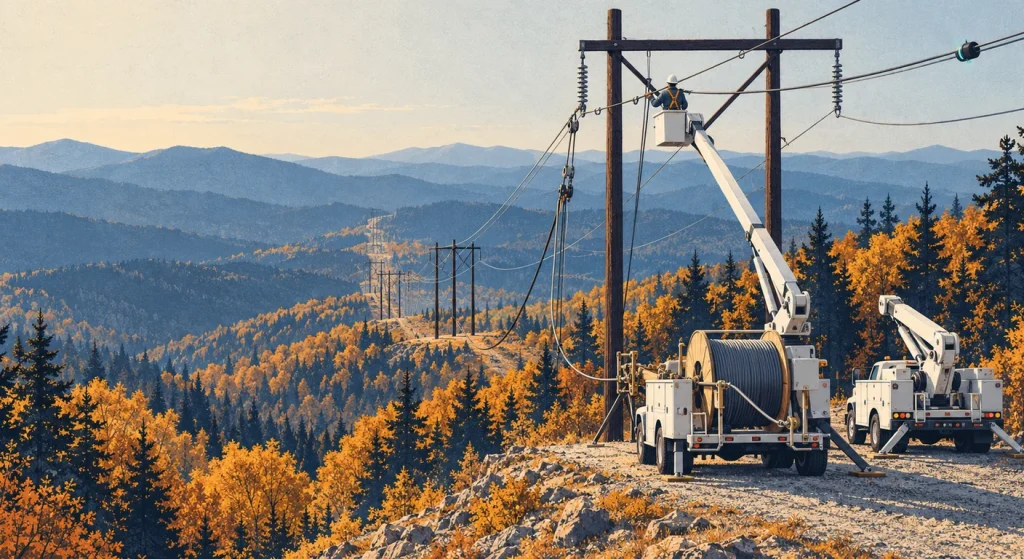
Hitachi Energy committed an additional $1.5 billion in April 2025 to expand transformer and solid-state transformer (SST) manufacturing capacity in Vaasa Finland, Bad Honnef Germany, and unspecified North American sites. The April 2025 announcement was the second tranche of capacity expansion the company has disclosed within an eighteen-month window and is the largest single capex commitment any established transformer manufacturer has made specifically referencing SST production lines.
The strategic context is straightforward. Industry analysts and utility procurement officials estimate the global transformer shortfall at approximately 30 percent of demand in 2025, with lead times on large power transformers stretching from a normal 50 to 100 weeks out to 150 weeks or longer. Data center construction, particularly for AI workloads, is the single biggest demand driver. Conventional iron-core transformer capacity additions take three to five years from announcement to commercial output. Hitachi Energy’s commitment includes both conventional and SST lines.
The geographic distribution of the new capacity is deliberate. Vaasa is the historical center of Hitachi Energy’s European transformer manufacturing, formerly ABB Vaasa, and supports both EU and global utility customers. Bad Honnef Germany serves industrial and grid-scale customers across the EU. The North American site additions, which Hitachi has not yet named publicly, are positioned to serve US hyperscale data center demand directly. The April 2025 commitment supplements an earlier expansion the company disclosed in late 2023.
Hitachi Energy is also one of the few western manufacturers with a multi-year track record of medium-voltage SST research. The company’s 2021 collaboration with Nanyang Technological University in Singapore, under Singapore’s Energy Grid 2.0 initiative, was one of the first international academic-industry SST partnerships outside the United States. That partnership has produced the 2.5 megawatt MV-SST demonstration at the National University of Singapore, executed jointly with Eaton, which is the largest publicly disclosed SST demonstration in Southeast Asia.
The pace of Hitachi Energy’s SST commercialization compares against ABB’s approach of a strategic equity investment in DG Matrix and Eaton’s acquisition of Resilient Power Systems. Each of the three largest western transformer manufacturers has chosen a different commercialization path. Hitachi Energy is the only one of the three pursuing a fully organic, in-house build.
Why It Matters
Utility procurement officers tracking transformer lead times should factor the Hitachi expansion into 2027-2030 supply forecasts but should not assume the SST share is large. Buyers planning SST procurements should request a specific SST-line capacity commitment from Hitachi rather than relying on the headline number. Independent transformer manufacturers competing with Hitachi for the same skilled labor pool (particularly in Vaasa and Bad Honnef) should expect tighter hiring markets through 2026 and 2027.
Critical Perspective
Hitachi Energy’s $1.5 billion expansion is the largest single SST-referenced capacity commitment from a top-tier transformer OEM, but the framing in vendor press releases overstates the SST share of the investment. Most of the new capacity at Vaasa, Bad Honnef, and the unspecified North American sites will produce conventional iron-core transformers, where the demand-supply gap is real and acute (industry estimates 30% transformer shortfall in 2025, 24-36 month lead times). Hitachi has not publicly disclosed what fraction of the $1.5 billion specifically funds SST production lines versus iron-core capacity, auxiliary components, or test facilities. The strategic message is important: Hitachi is positioning to manufacture SSTs at scale, signaling to utility procurement officers that an SST option exists from an established OEM. The fungible-capex reality is that conventional transformer demand is currently more lucrative per unit floor space than SST production, and Hitachi will optimize accordingly.